Orgasm Equality: Because "Good Enough" Isn't Good Enough


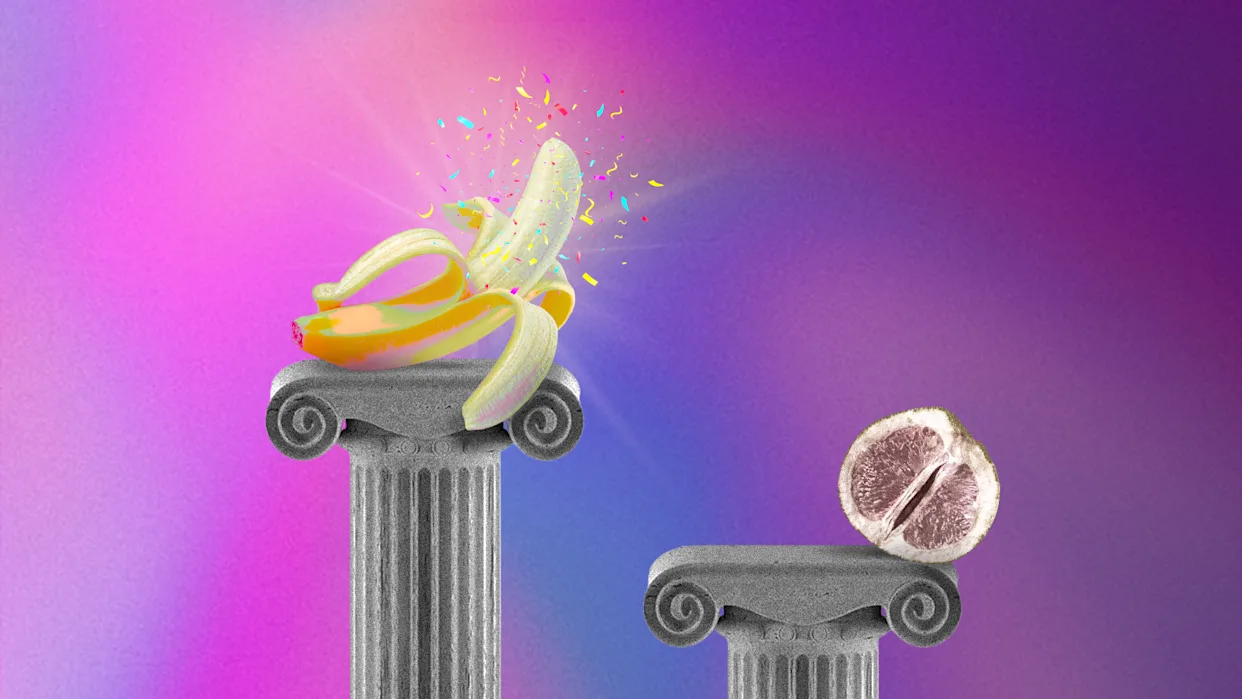
Let's talk about the elephant in the bedroom.
You know the one. The quiet, slightly awkward understanding that one person in the equation is consistently crossing the finish line while the other is... somewhere in the parking lot, wondering if they missed a turn. And somehow, over time, that dynamic becomes so normalized that the person left behind starts to wonder if maybe they're the problem.
Spoiler: they are not the problem. The culture is the problem. And I recently had the most clarifying, validating, slightly-overdue conversation about it with Dr. Laurie Mintz — therapist, professor, and author of Becoming Cliterate — who has spent her career essentially giving women permission to expect more.
— — —
The Orgasm Gap Is Real, and the Numbers Are Embarrassing
Dr. Mintz doesn't dance around it. There is a measurable, documented disparity between how often men and women reach orgasm during sexual encounters — and it is not subtle.
91% of men typically climax. For women: ~39%.
Read that again.
The maddening part? This isn't a biological inevitability. It's a cultural one. Dr. Mintz explains that we've built an entire framework around sex that treats vaginal penetration as the main event — when, biologically speaking, that approach simply doesn't work for most women. Female pleasure is largely centered around the clitoris, which is inconveniently ignored by the script we've all been handed.
So we've essentially been running a race with a completely wrong map, wondering why we're not winning.
— — —
The "Should" That's Killing Your Pleasure
Here's where it gets psychological — and honestly, where Dr. Mintz's work hits the hardest. One of the biggest barriers to orgasm equality isn't physical. It's the narrative loop running in the background that says your pleasure should happen a certain way, within a certain timeframe, without requiring any special effort or communication.
That "should" is doing an enormous amount of damage.
When women feel like needing more — more time, more stimulation, different stimulation, a conversation — is somehow a failing, they go quiet. They perform. They let good enough become the standard. And then they wonder why intimacy feels hollow.
Dr. Mintz is unambiguous here: learning to communicate what actually feels good, without guilt and without apology, is not optional. It's foundational. Your route to pleasure is just as legitimate as your partner's. Full stop. And yes — lube and vibrators are not admissions of inadequacy. They're tools. Intelligent people use tools.
— — —
The "Tired Woman" Is Not a Joke
I want to spend a moment on something Dr. Mintz names that I think deserves its own billboard: the sheer volume of women who aren't disinterested in sex so much as they are completely depleted by the time it becomes relevant.
Stress, mental load, exhaustion — when these take over, the brain's self-monitoring system kicks in and starts narrating every moment from the outside. Am I taking too long? Do I look weird? Did I send that email? This is the opposite of desire. This is your nervous system politely (and then loudly) opting out.
Her recommendation: Meditate. Lubricate. Masturbate.
Use mindfulness to bring your mind and body into the same zip code. Use lubrication to remove physical friction. Use solo exploration to understand your own body so you can actually show up for intimacy — with yourself and with a partner. It's not a luxury routine. It's maintenance.
— — —
The Takeaway
What Dr. Mintz is really advocating for — underneath all the data and the practical advice — is a fundamental reframing. Pleasure isn't frivolous. It's not secondary. It's not something you get to after everyone else's needs are met. Orgasm equality isn't a bonus feature in a healthy relationship. It's a baseline.
And the path there starts with believing you deserve it, which — if you've been conditioned to think otherwise — is genuinely radical.
Becoming Cliterate is worth every page. Consider this your formal recommendation.
✨ Free Resource: If this conversation stirred something up, download the Intimacy Reset Guide — a free resource to help you and your partner reconnect and reprioritize during life's biggest transitions.
Free Intimacy Resources
Choose the path that fits your life right nowYou might have heard me speak on a podcast or summit, and I wanted to make sure you left with something practical you can use right away.
Below are two free gifts from me, to you.

.svg)
.svg)
“Amy is a true professional and deeply skilled sexologist.”
Laura K.
Coaching Client